
Managing Bats in Buildings: Training Pest and Wildlife Control Operators in Effective and Bat-Friendly Practices
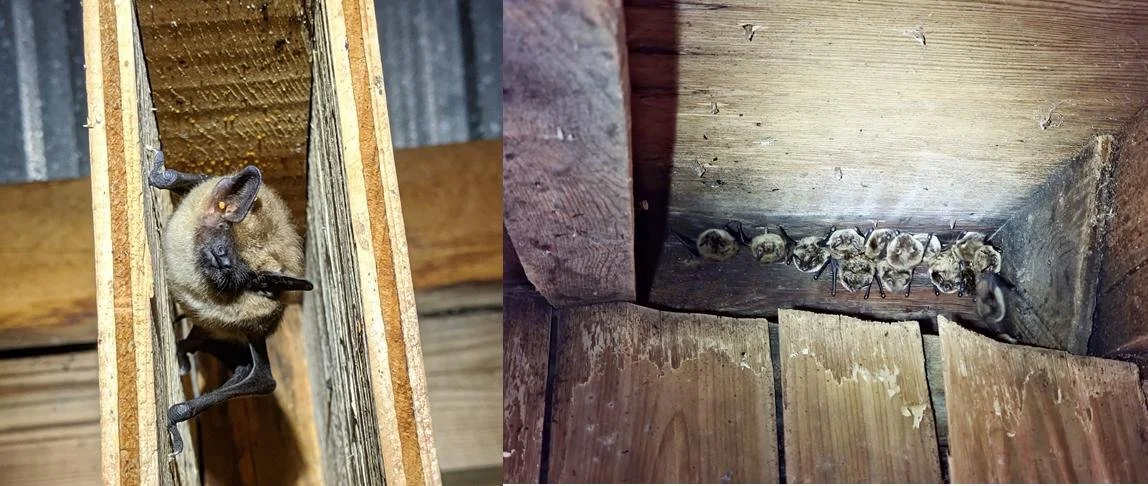
photos courtesy of Cory Olson
A homeowner calls after seeing bats fly out of their attic at dusk. They’ve been hearing increasing noise in the ceiling for weeks, and dark stains are now showing near a roof vent. Bats may even get trapped inside the rooms of their home. Situations like this are common for pest and wildlife control operators. Bats often roost in buildings across North America, and when they do, property owners often turn to professionals for help.
But managing bats isn’t the same as dealing with rodents or other structural pests. Bat work requires special attention to timing, legal protections, and proper exclusion techniques. Without the right training, even well-intended repairs can fail - or worse, harm bat populations already facing major threats like white-nose syndrome, habitat loss, and other factors that have contributed to their status as endangered species.
To address this, we created a training course specifically for pest and wildlife control operators. It teaches how to manage bat issues safely and effectively so both people and bats are protected. The course was funded by the federal government and several other funding agencies partly in response to the federal recovery strategy for Little Brown Myotis and other endangered bat species. Poorly timed or inappropriate exclusion work was identified as a key threat to these bats, making proper training essential.
Why Buildings Attract Bats
Bats naturally roost in places like tree cavities, under loose bark, and in rock crevices. Buildings can feel familiar to them - they’re warm, sheltered, and safe from weather and predators.
In Canada and much of North America, the species most often found in buildings are Little Brown Myotis and Big Brown Bats. These bats commonly form summer maternity colonies in attics, barns, and wall spaces. In British Columbia, other species like Yuma Myotis may also use buildings, and in parts of the U.S., Mexican Free-tailed Bats can be involved.
Most of the same management techniques work across species, but some situations may need extra care or input from a local bat specialist.
Most service calls involving bats fall into a few common categories:
A bat entering living space
A maternity colony roosting in an attic or wall void
Noise from bats moving within walls or ceilings
Guano accumulation and odour concerns
Homeowners discovering bats exiting the building at dusk
Although these situations can be alarming for property owners, they are typically manageable when approached with the right techniques and negative impacts to bats can be minimized with the use of best practices.
Bat Management Is Not Pest Control as Usual
Bats differ from many other nuisance wildlife species in several important ways. Most bats reproduce slowly, typically giving birth to only one pup per year. This slow reproductive rate means that bat populations are vulnerable to disturbance.
Population declines across North America have also been accelerated by white-nose syndrome, an introduced, invasive fungal disease that has killed millions of bats since 2006. Even small colonies of Little Brown Myotis represent important resources for population recovery. Because of these conservation concerns, bats are protected under wildlife regulations in many jurisdictions.
For pest management professionals, this means that improper handling of bat conflicts can create additional risks, including:
Violating wildlife regulations
Creating negative public relations situations
Causing failed exclusions that require repeat service visits
Knowing how bats behave through the seasons is key to doing bat work safely and correctly.
Exclusion: The Recommended Approach When Bats Must Go
The best way to deal with bats in a building is through exclusion. This method doesn’t involve handling bats. Instead, it lets bats leave on their own while blocking them from getting back inside.
A successful bat exclusion typically involves:
Conducting a detailed inspection to find all entry points
Identifying active access locations used by the colony
Installing one-way exclusion devices over these openings
Sealing secondary gaps and cracks that could allow re-entry
Returning to remove devices and complete final repairs
Bats can enter very small openings - sometimes only a half-inch wide - so careful inspection is critical. Even a single missed gap can allow a colony to re-establish inside the building. The course also outlines how to safely keep a bat colony in a building; a choice that isn’t for everyone but sometimes is a viable solution.
Timing Is Critical
Seasonal timing is one of the most important parts of bat work.
In late spring and summer, many bat species form maternity colonies. Females give birth, and the young stay in the roost for weeks because they can’t fly yet.
Doing exclusions during this period can trap young bats inside the building, leading to animal welfare issues and major problems for homeowners if the bats die inside.
It’s best to wait until the colony has dispersed later in the season. At that point, exclusions are safer, and operators usually don’t need to handle bats. Exclusion devices should be installed during the period before hibernation starts but after all juveniles have started to fly.
Proper training helps pest and wildlife control operators understand these seasonal patterns and choose the right timing for exclusion work.
Developing a Training Course for the Industry
To help address these challenges, we developed a training course tailored specifically to pest and wildlife control operators who encounter bats in buildings.
The course covers practical topics operators need in the field, including:
Bat biology and behavior
Identifying species commonly found in buildings
Seasonal activity patterns and maternity periods
Legal considerations and wildlife regulations
Inspection techniques for identifying entry points
Proper installation of exclusion devices
Health and safety considerations for technicians
Real-world case studies are also included to illustrate common challenges and provide practical solutions based on field experience. The course does not cover construction techniques; operators should have these skills to effectively repair areas of bat access.
Raising the Standard for Bat Management
As awareness of bat conservation continues to grow, pest and wildlife control operators play an increasingly important role in resolving bat conflicts responsibly.
With the right training and techniques, operators can protect both their clients and local bat populations while providing effective, professional wildlife management services.
Education and training help ensure that bat exclusions are not only successful—but also humane, compliant, and sustainable.
Sidebar: Common Bat Exclusion Mistakes
Some of the most frequent problems encountered during bat control jobs include:
Sealing entry points before installing exclusion devices
Conducting exclusions during maternity season
Missing small secondary access gaps
Using inappropriate materials that could entangle bats
Failing to return the following season to ensure that the job was successful
Proper inspection, timing, and installation techniques can prevent these issues and significantly improve exclusion success.
Sidebar: Benefits for Pest Management Professionals
Professional training offers several advantages for pest management companies and technicians. Operators who understand bat biology and exclusion techniques are better equipped to:
Diagnose bat problems accurately
Implement effective exclusion strategies
Reduce liability and regulatory risks
Improve customer confidence and satisfaction
Avoid costly repeat service calls
Maintain an image as a reputable “bat-friendly” company
Most importantly, trained professionals can resolve bat conflicts in ways that protect both the building and the bats themselves.
The Canadian online course, developed by WCS Canada bat biologists, is free to access with registration. It includes video lessons, short quizzes, and offers a completion certificate. A similar course for the southern U.S., created with the Association of Fish and Wildlife Agencies (AFWA), is currently in development, so stay tuned for its release.
See https://training.canadabats.org for free access to the course.

Susan Holroyd completed her M.Sc on the behavioural ecology of bats at the University of Calgary. She has worked as a biologist with a large environmental consulting firm in oil and gas in Alberta, as well as working as a provincial regional wildlife biologist in British Columbia with a focus on forestry and forest-dependent wildlife.
Susan currently serves as Conservation and Outreach Coordinator for the Alberta Community Bat Program at Wildlife Conservation Society Canada. She has been active supporting grant proposal development,